
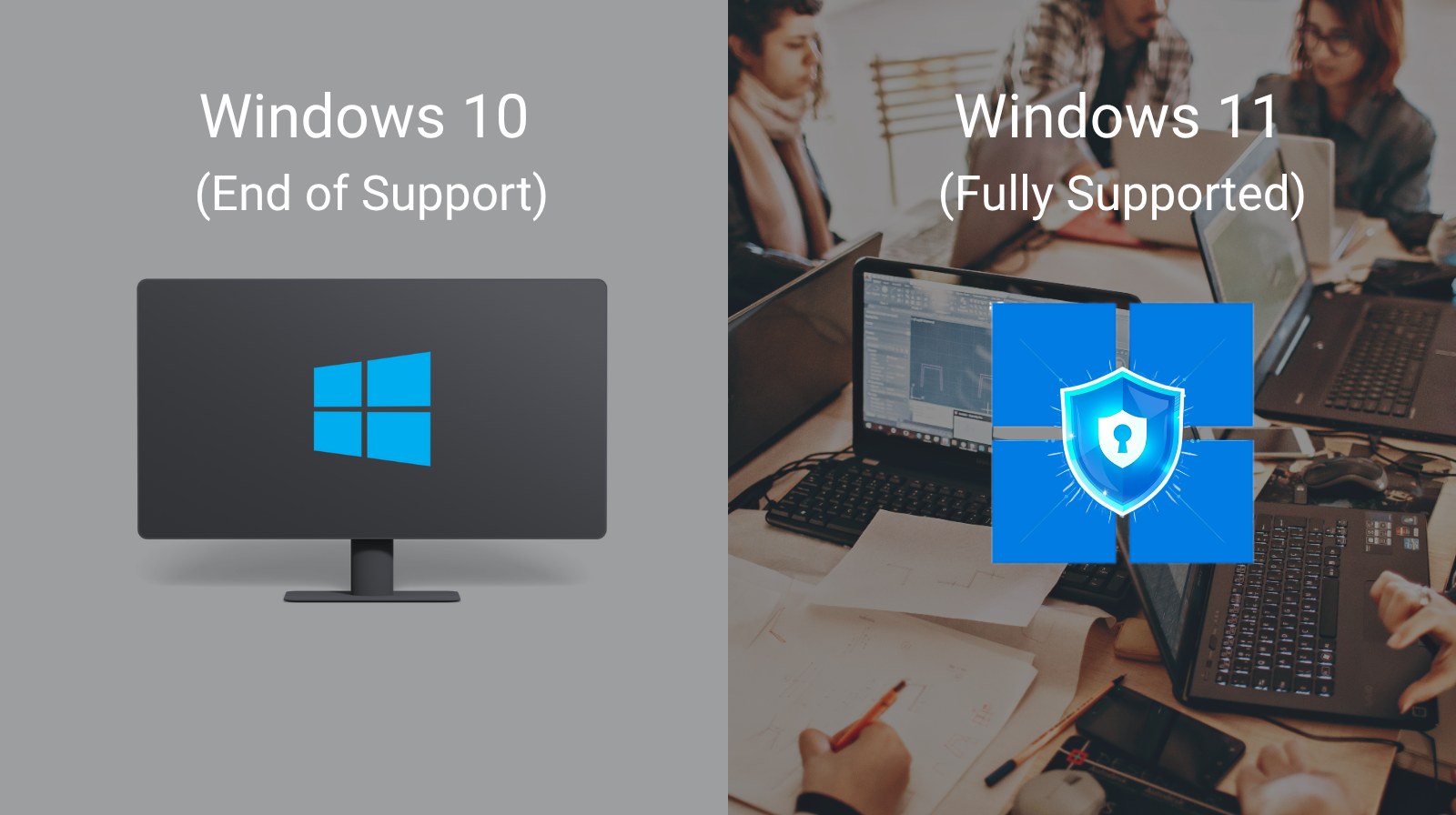
Windows 11 vs Windows 10: What’s Really Different for Business Users?

If your business is still running Windows 10, you’re not alone. Many UK small businesses have stuck with what works — and let’s be honest, Windows 10 has been a reliable workhorse. But with Microsoft now pushing Windows 11 more actively (and support for Windows 10 ending in 2025), it’s time to look at what’s actually different.

Is Windows 11 really worth the upgrade? Or is it just a shinier version of what you already have? Let’s break it down in plain English so you can make a clear, confident choice for your business.

The Problem: Upgrade Fatigue and Uncertainty

For many small business owners, the thought of a full Windows upgrade brings one thing to mind - disruption. New interfaces, compatibility worries, downtime, retraining… it’s a lot.

Add to that the endless stream of updates and changes from Microsoft, and it’s understandable why many teams have taken a “wait and see” approach.

But with Windows 10 support officially ending on 14 October 2025, businesses that delay too long risk running unsupported systems - which means security gaps, compliance issues, and increased downtime risk.

So, the key question isn’t just “should we upgrade?” but “what do we actually gain (or lose) if we do?”

Helpful Information / Solutions

What’s New in Windows 11?

Windows 11 builds on Windows 10’s core, but it brings several practical improvements - particularly around security, productivity, and user experience.


Here’s what stands out for business users:

  1.      Stronger Security by Default
    Windows 11 requires Trusted Platform Module (TPM) 2.0, which adds a hardware layer of protection against tampering and malware. It also enforces Secure Boot and Virtualisation-Based Security (VBS).
    In plain terms: it’s much harder for hackers or viruses to get deep into your system.

  2.       Cleaner, Simpler Interface
    The Start menu has moved to the centre (yes, a bit like a Mac). It’s designed to be less cluttered and easier to navigate - ideal for hybrid working setups where speed matters.

3.       Better Multitasking with Snap Layouts
Windows 11 introduces “Snap Layouts”, letting you neatly organise multiple windows on screen with one click - perfect for anyone juggling spreadsheets, Teams calls, and emails.


4.       Deeper Microsoft Teams Integration
Teams is built directly into the taskbar, making it faster to start meetings and chats. No more hunting for the app or waiting for it to load.


5.       Smarter Performance and Power Management
Windows 11 is optimised to run more efficiently on modern processors, which can mean faster boot times and better battery life for laptops.

Compatibility and Hardware Considerations

Here’s where things get tricky.

Not all PCs that run Windows 10 can handle Windows 11. The new system has stricter hardware requirements - particularly the need for TPM 2.0 and newer processors (Intel 8th Gen or AMD Ryzen 2000 and above).

If your hardware is more than five years old, it may not qualify for the upgrade. That means you might need to plan for hardware refreshes as part of your migration strategy.

Harmony IT can source business grade Lapops and PCs that are compatible and meet your requirements

The good news? New business-grade laptops and desktops are already fully compatible - and if you buy a device now, it’ll likely come with Windows 11 pre-installed.

Examples / Analogies / Stats

Think of Windows 11 as a refreshed office space. The walls are the same, but the layout’s been optimised, the locks are stronger, and the lighting’s better. You can work more comfortably and securely, even though it still feels familiar.

A few data points worth noting:

  • Microsoft claims Windows 11 devices show 25% better performance in Microsoft Edge and up to 15% longer battery life on laptops compared to Windows 10.

  • According to industry surveys, over 60% of small businesses plan to move to Windows 11 before the 2025 deadline, largely due to security and compliance needs.

For comparison, the transition from Windows 7 to 10 was more disruptive - this one’s smoother because apps and management tools (like Microsoft 365, Intune, and Azure AD) work almost identically on both systems.

Benefits: Why It Matters Now

Upgrading isn’t just about keeping up appearances — it’s about staying secure, supported, and productive.

Here’s what your business gains:

  • Futureproof security – Windows 11’s hardware-based protections are built to defend against today’s ransomware and phishing attacks.

  • Improved user experience – Staff spend less time hunting through menus and more time getting work done.

  • Better support lifecycle – You’ll get regular updates and security patches beyond 2025.

  • Smoother integration with modern tools – Microsoft 365, OneDrive, Teams, and cloud services all run more efficiently.

Positive perception – Clients and partners notice when your business runs up-to-date systems — it shows you take reliability and security seriously.

Actionable Tips: What to Do Now

If you’re still on Windows 10, here’s a simple roadmap to get you sorted:

  1.      Check device compatibility
    Use Microsoft’s “PC Health Check” tool to confirm if your current devices can run Windows 11.

2.       Audit your key software
Make sure critical apps (like accounting or CRM tools) are compatible. Most modern ones already are, but double-check with your suppliers.

3.       Plan phased upgrades
Don’t rush. Start with a few test machines, iron out any issues, and roll out in batches. This reduces downtime and training needs.

4.       Back up before upgrading
Always have reliable backups of all data — whether via OneDrive, local drives, or a managed backup service.
→ Learn more about our [Link: Backup and Recovery Solutions].

5.        Get IT support involved early
Whether in-house or outsourced, having professionals manage the migration ensures licences, drivers, and security settings are configured correctly.

Windows 11 isn’t a dramatic overhaul — it’s a smarter, more secure evolution of Windows 10. For most UK businesses, the upgrade will bring better security, smoother productivity, and peace of mind knowing you’re supported beyond 2025.

If your current PCs meet the requirements, upgrading is well worth planning now. And if they don’t, this might be the perfect time to modernise your devices and simplify your IT setup.

Ready to cut downtime and stress? Let’s make IT simple.

Contact Harmony IT Services for a smooth, no-surprises Windows 11 upgrade

If you’ve bought a new laptop or desktop recently, chances are it came with McAfee already installed. It’s one of those “just leave it there” bits of software many businesses never question.

But here’s the honest truth - we often see McAfee causing more frustration than reassurance, especially for small UK businesses trying to keep things running smoothly. So, is it actually doing its job… or quietly slowing everything down?

Let’s break it down in plain English.

The Problem: “It Came With the Computer… So It Must Be Fine, Right?”

Let’s be honest - most business owners don’t actively choose McAfee. It’s typically:

  • Pre-installed on new machines
  • Included as a trial (often 30–90 days)
  • Renewed automatically without much thought

On paper, that sounds convenient. No setup, no decisions, job done.

But in reality, we regularly come across issues like:

  • Sluggish PCs (especially on startup)
  • Pop-ups prompting upgrades or renewals
  • Background scans affecting performance
  • Staff complaining that “the computer is just slow today”

And more often than not, McAfee is part of the picture.

What McAfee Does Well (Fair and Honest)

To give credit where it’s due, McAfee isn’t useless. It does offer:

  • Real-time virus protection – Helps block known threats
  • Web protection tools – Warns about unsafe websites
  • Firewall features – Adds an extra layer of security
  • All-in-one packages – Covers multiple devices in one licence

For home users or very light business use, it can be “good enough.”

But for businesses that rely on speed and consistency? That’s where things start to wobble.

The Reality: Performance Impact and System Slowdowns

What We See in Real Businesses

Across many of the systems we manage, McAfee tends to have a noticeably higher overhead than other antivirus solutions.

In plain terms, that means:

  • It uses more system resources (CPU and memory)
  • It runs frequent background processes
  • It can slow down boot times and general responsiveness

This is especially noticeable on:

  • Older PCs
  • Entry-level laptops
  • Machines running multiple business apps (e.g. accounting software, browsers with lots of tabs)

What Independent Testing Suggests

Independent antivirus testing organisations (like AV-Test and AV-Comparatives) regularly measure performance impact - how much security software slows a system down.

While McAfee often scores well for protection, results over the years have shown:

  • Moderate to high system load during scans
  • Slower file copying and application launching compared to lighter alternatives
  • Background activity affecting performance even when idle

(These findings vary by version and test cycle, but the trend is consistent enough to be worth noting.)

Why This Matters for Small Businesses

A slight slowdown might not sound like a big deal- but across a team, it adds up:

  • 10–15 seconds extra boot time × multiple staff = lost time daily
  • Slower apps = frustration and reduced productivity
  • “Freezing” during scans = disruption mid-task

Over weeks and months, that’s a real cost.

Why McAfee Feels Heavy (In Simple Terms)

McAfee tends to run a lot behind the scenes:

  • Continuous real-time scanning
  • Scheduled full system scans
  • Browser monitoring tools
  • Update services and background checks

Think of it like having a security guard checking every single person multiple times before letting them into the building. Safe? Yes. Efficient? Not always.

Other modern solutions aim to be smarter—checking only what’s necessary, when it’s necessary.

Common Signs McAfee Might Be Slowing You Down

If you’re unsure whether it’s affecting your systems, look out for:

  • PCs taking ages to start up
  • Fans running loudly even with light usage
  • Delays opening files or applications
  • Performance dips at the same time each day (often scheduled scans)
  • Staff regularly restarting machines to “speed things up”

We see these patterns regularly - and removing or replacing McAfee often leads to an immediate improvement.

Alternatives That Are Worth a Look

Without pushing any one vendor, there are lighter, business-friendly options available that tend to offer:

  • Lower system impact
  • Quieter operation (fewer pop-ups)
  • Central management for multiple devices
  • Better performance on older hardware

Even built-in tools like Microsoft Defender (included with Windows) have improved massively and are now a solid baseline for many small businesses.

The key is choosing something right-sized for your setup—not just sticking with what came in the box.

Benefits of Reviewing Your Antivirus Setup Now

Switching or reviewing your current setup can bring some quick wins:

  • Faster PCs – noticeable improvement straight away
  • Happier staff – fewer complaints about slow machines
  • Better value – avoid paying for something that isn’t ideal
  • Stronger security posture – when properly configured

It’s one of those small changes that can make a big day-to-day difference.

Actionable Tips: What You Can Do Today

1. Check What You’re Running

  • Go to your installed programs
  • Look for McAfee subscriptions or trials
  • Check expiry dates—you might be paying without realising

2. Monitor Performance

  • Open Task Manager (Ctrl + Shift + Esc)
  • Look for high CPU or memory usage linked to McAfee processes

3. Review Startup Impact

  • Check how long your PC takes to boot
  • Compare before and after disabling startup items (carefully)

4. Don’t Run Multiple Antivirus Tools

  • This can actually slow things down further and cause conflicts

5. Get a Second Opinion

  • A quick IT health check can confirm whether McAfee is helping or hindering

McAfee isn’t “bad”—but for many small businesses, it’s simply not the best fit. The biggest issue we see is its high system overhead, which can quietly drag down performance over time.

If your team is dealing with slow machines, it’s absolutely worth reviewing what’s running in the background—especially if it came pre-installed.

Got a question? Get in touch and we’ll get you sorted.
We’ll take a look at your setup and recommend something that keeps you protected without slowing everything down.

Related Posts

The Best Business Laptops for Windows 11 in 2026

The Best Business Laptops for Windows 11 in 2026

Choosing a business laptop in 2026 isn’t just about picking something that turns on . With Windows 11 now firmly embedded in modern workplaces , the right laptop can make a real difference to productivity, security, and day-to-day sanity. If you’re a UK small business...

read more...